The Conversation
15 Sep 2025, 00:02 GMT+10
Share article
Print article
The sound of a large drone humming over a forest at night, combined with a bright floodlight, is an eerie sight. It might evoke ominous thoughts of a search-and-rescue operation.
But our new study published in Ecological Applications shows that drones equipped with thermal cameras could also help detect and monitor some of Australia's most elusive forest wildlife. In turn, they can help us make smarter, evidence-based decisions for conservation.
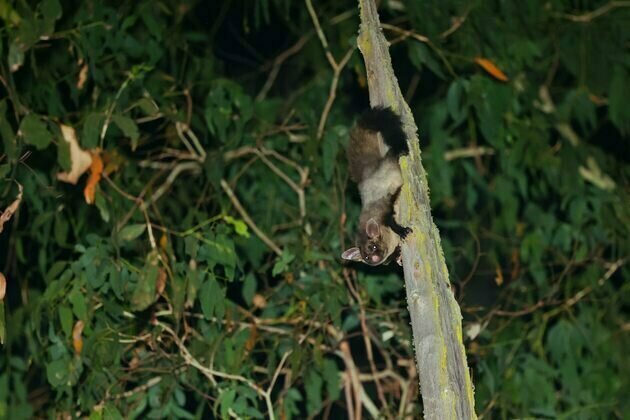
Eucalypt forests across Victoria shelter some of our most threatened nocturnal wildlife, such as Victoria's critically endangered faunal emblem, Leadbeater's possum, and the endangered southern greater glider. Few people would have seen these creatures in the wild - in large part because they spend most of their time high in the trees and can be incredibly difficult to detect.
But monitoring them is crucial. Populations are shrinking due to habitat loss, forest fires and climate change. Conservation and management decisions depend on accurate data about where these animals live and how abundant they are.
Traditionally, researchers conduct these surveys by walking along defined paths called transects through the forest, sweeping torches to catch the eyeshine of animals as it reflects back to the observer. Eyeshine varies by species - greater gliders glow golden, Krefft's gliders blue, and brushtail possums red. But binoculars help in identifying species as well.
But this process - known as "spotlighting" - can be slow, labour intensive and potentially dangerous for the survey teams, especially in steep or dense forests. Even with careful sampling, spotlighting often fails to detect all the animals present.
Remote sensing techniques that help collect information from a distance are changing the game for wildlife monitoring. For example, acoustic recorders can survey birds and frogs and motion-activated cameras can detect shy mammals. This recently led to the discovery of critically endangered Leadbeater's possums far outside their assumed range.
But animals like the greater glider rarely make calls that can be captured by acoustic recorders and their strict diet of eucalypt leaves means they can't be attracted to baited camera traps.
This is where drones equipped with thermal cameras come in.
Until recently, most thermal drone surveys had been tested on animals in open landscapes, such as feral goats, or in tree plantations, such as koalas. They have also helped find some elusive species in the rainforests of Queensland that are active during the day. But no one has previously studied their effectiveness in detecting nocturnal animals in native forests.
As part of our new research, we flew drones across forest compartments up to 200 hectares in size while also conducting ground-based surveys to compare results. Drones flew systematic paths over the canopy, using thermal cameras to detect animals' heat signatures. After an animal was spotted, a zoom camera and floodlight were then used to identify species.
The results were striking. Our drones detected all nine tree-dwelling mammals expected in the study areas. Species commonly surveyed using spotlighting were recorded most frequently. But we also recorded species that are usually detected using remote cameras, such as Leadbeater's possums, or through their calls, such as yellow-bellied gliders.
In total, we made more than 1,000 observations of native mammals, as well as forest birds, and ground-dwelling fauna such as bandicoots, wombats, feral deer and cats.
Drone surveys were also far more efficient - one drone survey could cover roughly ten times the area a spotlighting team could survey in the same time.
Once we knew that thermal drone surveys are effective in finding forest-dwelling species, we conducted over 100 additional drone surveys and found more than 4,000 animals, including observations of more than 400 greater gliders.
The ongoing study will help inform wildlife recovery in Victoria. It allows us to explore questions such as: do specialist species such as greater gliders use younger forests for foraging? Are they truly edge sensitive - meaning do they avoid the areas where mature forest borders young forest or other land uses? At what forest age may they re-establish stable populations?
Answers to these questions will help guide future forest management - including where and how to conduct prescribed burns, where to establish fire breaks, and how to buffer key habitat from future disturbance.
While drones will not entirely replace all ground-based surveys, they vastly improve the scale and detail of our wildlife observations. And while there may be concerns about disturbances to the observed animals from the sometimes loud drones overhead, collected footage indicates that most animals don't seem to notice they are being observed from the air.
This contrasts with what we usually experience during spotlighting, where animals "freeze" in place while being observed with a strong torchlight. Analysing hours of videos from our drone surveys, we are currently researching potential behavioural impacts of these new methods to contrast them with traditional ground methods.
So, while the buzzing of a drone overhead at night may feel unfamiliar for now, this new technology will provide great leaps in monitoring and protecting some of Australia's most iconic and threatened forest species.
Get a daily dose of Perth Herald news through our daily email, its complimentary and keeps you fully up to date with world and business news as well.
Publish news of your business, community or sports group, personnel appointments, major event and more by submitting a news release to Perth Herald.
More InformationNapa [US], September 14 (ANI): Akshay Bhatia overcame a disastrous triple bogey on the Par-4 seventh hole, but still managed a 2-under...
Washington, DC [US], September 14 (ANI): Officials from the US and China plan to meet in Madrid on Sunday for their fourth round of...
New Delhi [India], September 14 (ANI): Congress MP Manish Tewari on Sunday expressed serious concern over reports that Pakistan-based...
Abu Dhabi [UAE], September 14 (ANI/WAM): The International Humanitarian and Philanthropic Council (IHPC) at the UAE Presidential Court...
New Delhi [India], September 14 (ANI): India's foreign exchange reserves rose by USD 4.038 billion in the week that ended September...
Aizawl (Mizoram) [India], September 13 (ANI): Assam Rifles has seized methamphetamine tablets worth over Rs 7.11 crore during an anti-narcotics...
NEW YORK CITY, New York: The long-running question of who would control Rupert Murdoch's vast media empire has finally been answered....
SYDNEY, Australia: Australia's ANZ is embarking on one of its deepest restructurings in years, with new CEO Nuno Matos announcing 3,500...
(Photo credit: Mike Frey-Imagn Images) Pedro Martinez, Jaume Munar and Pablo Carreno Busta all contributed to Spain's reverse sweep...
Share article Print article The sound of a large drone humming over a forest at night, combined with a bright floodlight, is an...
New Chandigarh (Punjab) [India], September 14 (ANI): A pure batting display from Australia secures them a clinical eight-wicket win...
Mumbai (Maharashtra) [India], September 14 (ANI): The India A squad for the home series against Australia A, consisting of three one-day...